
Published 2026-11-10 · DIYCarPlay Engineering Team · 16 min read
How Many Cars Does One CarPlay Platform Code Cover: The Fitment Sheet Line That Decides What an Order Line Means
A platform code on a purchase order is not one car. It is one factory generation, and in this catalogue that generation reaches anywhere from a single model line to twelve. Seven of the 39 platform codes list exactly one model name, two list twelve, and the shape of the fitment sheet line underneath each code is what tells a buyer which of the two it is. That difference decides something concrete: whether an order line written from the fitment sheet is a complete key on its own, or whether the line still needs the car in front of it before the unit ships.
The catalogue behind those codes is 39 platform codes over 76 code-and-model-line combinations, covering 300+ vehicle models and series from model years 2006 to 2025. Every one of the 76 lines names the cars a code fits and the years that line covers. What the lines do not agree on is their own internal shape, and the shape carries a different kind of year statement depending on which of the two conventions the line uses.
Reading a code off the vehicle has been covered from nine directions: the shape of the centre display, the string on the version screen, the build plate and the parts catalogue, the model year, a diagnostic read on the vehicle network, a code that carries more than one generation, the factory CarPlay date, the family the code's name belongs to, and the chassis designation stamped into the body. This one starts at the other end of the process. It asks how wide a code is, how the fitment sheet records that width, and what a distributor can safely put on an order line once the width is known.

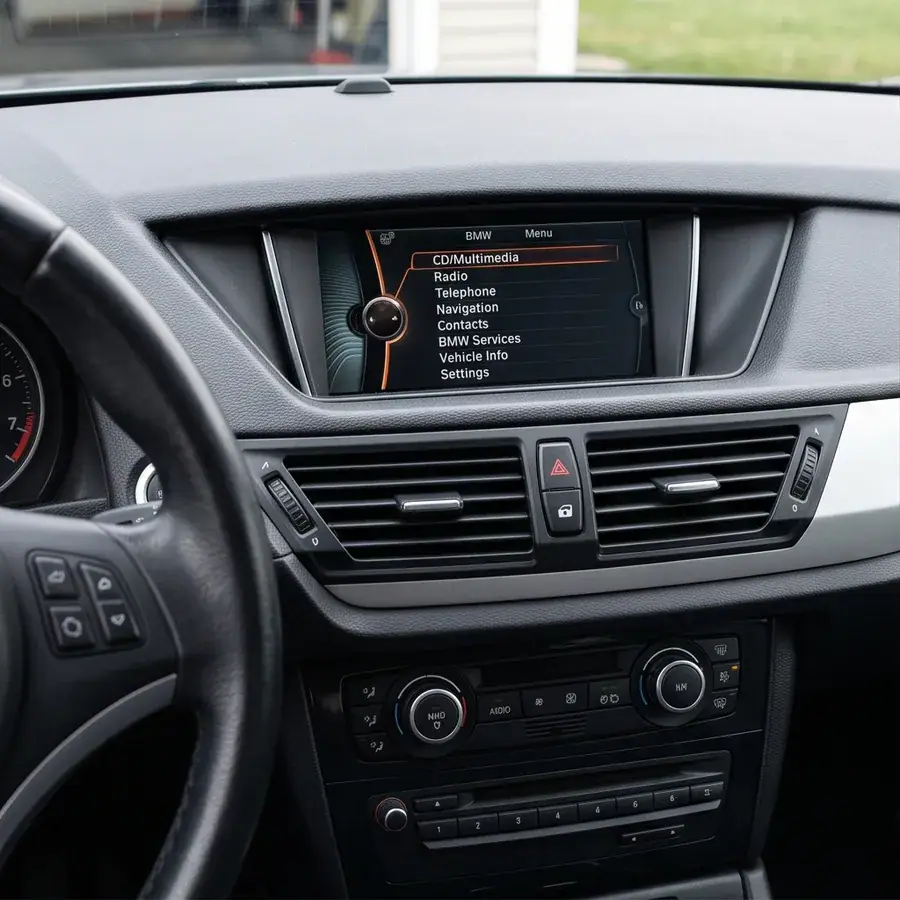
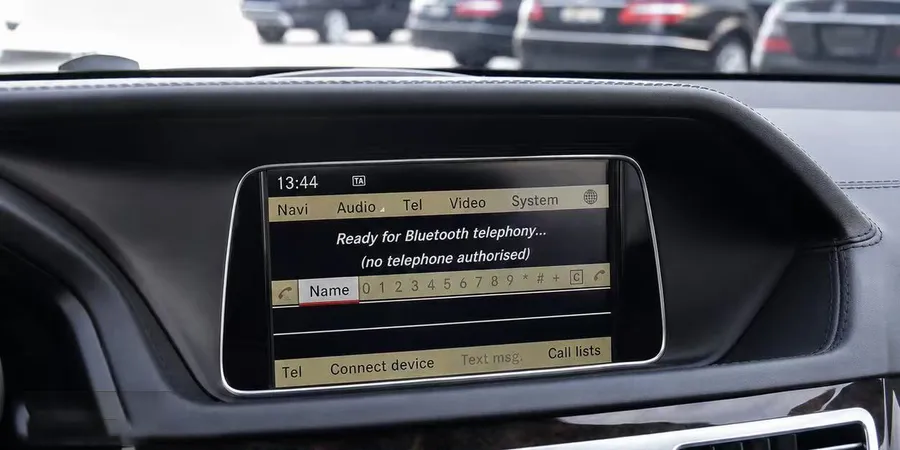
What one platform code actually covers
A platform code is a purchasing label. It fixes the harness termination, the video path and the CAN bus wake-up message the unit listens for, and it is what a carton is printed against. It is not a model name, and in this catalogue the distance between the two varies enormously. One code can name a single model line, in which case the code and the car are effectively the same statement. Another can name twelve, in which case the code is a label for a family of cars and the fitment sheet has to travel with the goods to say which family member is in front of the workshop.
The narrow end of that range is small and sharply defined. Seven codes list a single model name and nothing else, and the table below sets out all seven. Every one of them is a code where the model name on the fitment sheet is the whole of the car coverage, and where the code label's own year range is also the entire window for that one line.
| Platform code | Marque | The one model name on the fitment line | Model years on that line |
|---|---|---|---|
| AS-1 | Aston Martin | DB11 | 2016–2019 |
| AS-2 | Aston Martin | Vantage | 2018–2020 |
| BE-1 | Bentley | Mulsanne | 2011–2020 |
| BE-2 | Bentley | Bentayga | 2016–2019 |
| LP610 | Lamborghini | Huracán LP610 | 2014–2018 |
| LP700 | Lamborghini | Aventador LP700 | 2011–2016 |
| RO-CIC | Rolls-Royce | Phantom | 2006–2012 |
The wide end is where a code stops being a single-car statement. Two codes list twelve model names each, and three more list eleven. The table sets out the five widest, with the number of model names each one carries and the number of fitment lines those names are spread across.
| Platform code | Marque | Model names on the fitment line | Fitment lines | Code year label |
|---|---|---|---|---|
| NBT | BMW | 12 | 12 | 2012–2016 |
| EVO | BMW | 12 | 12 | 2015+ |
| CIC | BMW | 11 | 11 | 2008–2014 |
| NTG4.5/4.7/5.0 | Mercedes-Benz | 11 | 1 | 2013–2019 |
| MMI 3G | Audi | 11 | 5 | 2009–2018 |
One detail in that table is worth pausing on, because it is the kind of thing that makes a buyer distrust a fitment sheet. The BMW NBT and EVO codes each list twelve model names, and the two lists are identical: every name on the NBT line is also on the EVO line, because the two codes cover the same twelve nameplates in two different generations. Nine of those twelve names appear under a third BMW code as well, the CIC code, which covers eleven names of its own and adds two the others do not have. So a code can be wide because it spans a family, or wide because it spans generations of the same nameplate, and in BMW's case it is both at once. Coverage width and overlap are two different measurements, and the table in the next section separates them.
Two ways the fitment sheet is written
Of the 76 fitment lines, 45 name exactly one model and 31 name two or more, bundled behind a single year range. The two conventions are not spread evenly across the catalogue. They follow the marque, because a manufacturer that carried one head unit across a whole range gets recorded in one line per platform, while a manufacturer that retired a platform car by car gets recorded in one line per car.
Mercedes-Benz illustrates the first convention. Its three codes cover 16 model names between them and occupy three fitment lines, so a single line carries eleven nameplates for the NTG4.5/4.7/5.0 code across 2013 to 2019. BMW illustrates the second: its three codes cover 14 model names and occupy 35 lines, because each BMW nameplate left the platform on its own schedule and therefore gets a line of its own. The table below gives the same measurement for every marque in the catalogue, with the number of fitment lines each one is written in.
| Marque | Platform codes | Fitment lines | Model names | Lines per name |
|---|---|---|---|---|
| BMW | 3 | 35 | 14 | 2.50 |
| Audi | 3 | 8 | 11 | 0.73 |
| Mercedes-Benz | 3 | 3 | 16 | 0.19 |
| Volvo | 3 | 3 | 8 | 0.38 |
| Porsche | 3 | 3 | 6 | 0.50 |
| Land Rover / Jaguar | 3 | 3 | 6 | 0.50 |
| Rolls-Royce | 3 | 3 | 5 | 0.60 |
| Toyota | 2 | 2 | 8 | 0.25 |
| Lexus | 2 | 2 | 7 | 0.29 |
| Nissan / Infiniti | 2 | 2 | 6 | 0.33 |
| Bentley | 2 | 2 | 2 | 1.00 |
| Lamborghini | 2 | 2 | 2 | 1.00 |
| Aston Martin | 2 | 2 | 2 | 1.00 |
| McLaren | 1 | 1 | 8 | 0.13 |
| Volkswagen | 1 | 1 | 7 | 0.14 |
| Ferrari | 1 | 1 | 6 | 0.17 |
| Maserati | 1 | 1 | 2 | 0.50 |
| Alfa Romeo | 1 | 1 | 2 | 0.50 |
| Honda | 1 | 1 | 2 | 0.50 |
Read down the lines column and the two conventions separate cleanly. The marques near the bottom of that table are written in one line per platform, and the lines run long. The marques near the top are written in one line per car, and the lines run short. Both are legible ways to record a fitment, and a buyer who has worked with one of them will find the other unfamiliar until they notice which convention is in play.
This is not a quirk of one supplier's catalogue. Apple's own list of CarPlay-compatible cars names each car by marque, model name and model year, and it has to record the same split the fitment sheet records: the 1 Series appears twice in that list, once across 2017 to 2025 and once across 2021 to 2025, because the nameplate was carried across two generations and the year range on each entry is a different statement. Where the list can break a nameplate into two entries, the fitment sheet breaks it into two lines. Where it cannot, it puts several names on one line and the year has to cover all of them.
The year on a bundled line and the year on a separate line are not the same statement
This is where the two conventions stop being a filing preference and start carrying information. In a line that names one car, the year range is that car's own window inside the platform, and it is usually narrower than the code label printed above it. In a line that bundles several nameplates, the year range is the platform's window applied to the whole group, and it almost always matches the label exactly.
Measured against the code label above it, 29 of the 31 bundled lines carry the label's own year range unchanged, while only 9 of the 45 single-nameplate lines do. The remaining 36 single-nameplate lines are narrowed in some way, and those narrowings are what the model-year traps in the earlier guide on model-year windows are made of. A buyer reading a bundled line is reading a platform-level year that cannot separate the names on it. A buyer reading a separate line is reading a car-level year that can.
The Audi MMI 3G code shows both conventions inside one code, and it shows a second thing worth watching. Its five lines bundle A1 with Q3, bundle A4 with A5 with Q5 with S4 with S5, bundle A6 with A7 with Q7, and then give Q5 and A8 a line each of their own. The Q5 therefore appears twice under the same code, once inside the five-nameplate bundle across 2009 to 2018 and once on a line of its own across 2012 to 2018. Two lines under one code, the same name on both, and a year range that starts three years apart. A fitment line is not a one-to-one statement about a car, and this code is the clearest case in the catalogue.
Where the widest codes meet the hardest names
Coverage width and fitment difficulty travel together, and the catalogue shows it. Counting each model name once, 50 model names in this catalogue are covered by more than one platform code, and 10 model names whose year windows are identical under two codes cannot be separated by the year at all. Those are the names the earlier guides on model-year traps and on platform code naming work through.
The codes that reach the widest set of names are also the codes where the names are hardest to pin down. Of the 16 codes listing six or more model names, five have every one of those names also listed under another code: the two BMW codes that carry a full range, and the three Land Rover and Jaguar codes, which each list the same six names. At the other end, of the seven codes listing exactly one model name, six have that name to themselves. The exception is the Rolls-Royce RO-CIC code, whose single nameplate, the Phantom, is also listed under RO-NBT and RO-EVO.
The relationship is a tendency rather than a rule, and the exceptions are where a buyer should look. The McLaren code lists eight model names and none of them is shared with another code, because McLaren runs a single platform code across its whole range. The Volkswagen code lists seven and is equally clean. The Land Rover and Jaguar codes list six each and every one of those names is shared three ways, because all three codes cover the same six cars and are separated by the audio system and the display rather than by the car. Same number of names, opposite fitment difficulty, and the difference is written in the catalogue's structure rather than in the cars.
What to write on the order line
Three rules follow from the coverage widths, and they apply to the whole catalogue rather than to one marque.
The first is that a code whose fitment line names one car needs nothing else on the line. The badge, the model name and the model year settle it, and the code follows. Six of the seven single-nameplate codes work that way. The Rolls-Royce RO-CIC code does not, because its one nameplate recurs under the other two Rolls-Royce codes, and the year is what separates them.
The second is that a code whose fitment line bundles several names needs the model name on the line, and the year on that line will not do the work. A line reading the NTG4.5/4.7/5.0 code with the 2013 to 2019 window does not tell a buyer whether the car in front of them is an A-Class or a GLE-Class, because that range is the platform's and both sit inside it. Writing the name is what makes the line usable.
The third is that where a marque uses both conventions at once, the line has to carry the car rather than the range. Audi MMI 3G is the case, and the Q5 is the trap: one code, two lines, the same model name on both, and year ranges three years apart.
What no order line should carry is a bare year and a bare badge. That is the case the earlier guide on model-year traps works through in full, with the 10 model names whose windows are identical under two codes as the sharpest end of it. Where the code's own fitment line settles the car, the line needs the name and the year; where the line does not, the head unit settles it, and the earlier guide on the version screen and the one on the diagnostic read cover the two ways to do that without a fitment sheet in hand.
The vehicle fitment finder walks the same fitment data by model, by nameplate and by platform code, and the per-marque module index carries the code list for each marque. Both are the faster way to check a line before a pallet is committed than reading it off the fitment sheet by hand.
Terms, lead time and what the unit itself is
What arrives against a code does not change with the way the code was chosen. The unit runs Linux in an embedded configuration on an automotive-grade Taiwanese Sunplus chipset, pairs the phone over dual-band WiFi at 2.4GHz and 5GHz, and terminates into the factory display through the vehicle harness as a plug-and-play connection. The factory screen, the factory host, the steering-wheel buttons and the factory reversing camera all stay in service, no dashboard trim is replaced and no coding is needed. The harness plugs into the factory connectors on the CAN bus, so the head unit keeps its own menus. The 5GHz band is what carries the picture when a car is parked in a structure where 2.4GHz is congested, which is why the dual-band arrangement matters more to a workshop doing a retrofit than the headline number of any single band does.
What holds the return rate down is fixed function on fixed hardware rather than peak performance. A unit that does one thing on one chipset has no background state to accumulate over the years it stays in a car, and that is the reason the Linux embedded approach is quoted the way it is rather than as a specification race. The band allocation follows the same logic rather than a headline figure: the Wi-Fi Alliance keeps 2.4GHz and 5GHz as separate, non-interchangeable bands, and a unit that pairs on both keeps working when one of them is congested.
Stock is available from 10 pcs with mixed platform codes in one order, so a buyer can test one code against one car without buying a pallet to find out. A private label programme runs from 500 pcs per model, and a Full OEM firmware build from 1000 pcs per model, with the same code list carried through to the carton label. Samples ship in 7 to 15 days by DHL or FedEx, and a private label run of 500 or more pcs takes 15 to 20 days from order to dispatch. Payment is 30% deposit with the 70% balance settled against a copy of the bill of lading, by T/T. A sample fee is credited against the first large-volume order, so the code a sample was built against does not have to be the final code for the sample cost to disappear. A quotation goes out within 12 hours, with volume tiers and the lead time for each platform named. Full terms sit on the wholesale, private label and OEM programme page.
Frequently asked questions
How many cars does one CarPlay platform code cover?
Between one and twelve model names in this catalogue. Seven codes list a single model name, and two list twelve. Most sit in the middle: the coverage width of a code is a fact about how the marque recorded its fitment, and it is visible on the fitment sheet before any vehicle is involved.
Why do some fitment lines list several models and others list one?
Because a manufacturer that carried one head unit across a whole range gets recorded in one line per platform, and a manufacturer that retired a platform car by car gets recorded in one line per car. Mercedes-Benz is written in three lines for 16 model names; BMW is written in 35 lines for 14. Neither is a mistake, and a buyer reading either has to know which convention the line uses before the year on it can be read.
Does the year on a fitment line settle which platform code applies?
It depends on the line. On a line that bundles several names, the year is the platform's own range and cannot separate the names on it, which is why 29 of the 31 bundled lines repeat the code label's year range unchanged. On a line that names one car, the year is that car's window and is narrower than the label in 36 of the 45 cases. And in 10 model names across the catalogue, the year cannot settle the code at all because two codes carry identical windows.
Which codes can be ordered on the model name alone?
Six of the seven codes that list a single model name: the Bentley, Lamborghini and Aston Martin codes, where the one name on the line is that code's only car. The exception is the Rolls-Royce RO-CIC code, whose Phantom also appears under RO-NBT and RO-EVO. Separately, 14 codes carry no model name that any other code shares, and those can be ordered on the name without a year check, including the McLaren, Volkswagen and Ferrari codes that each cover several cars.
Next step
Send us your target vehicle list, quantities and target market through the inquiry form. You will receive a quotation within 12 hours, including volume tiers and lead times for the platforms you named.
Need the Module From This Guide?
Wholesale from 10 pcs (mixed models OK), samples in 7–15 days (DHL/FedEx express). Fitment confirmation within 12 hours.
Request Pricing Check FitmentRelated Resources
- CarPlay Collections — browse by marque family (German, British, Italian, Japanese, luxury)
- CarPlay Fitment Checker — find the module for your car
- CarPlay Decoder FAQ — 34 answers on compatibility, install and wholesale
- CarPlay Retrofit Buying Guide — platform identification & selection
- Wholesale, Private Label & OEM Program — MOQ, lead times, payment terms
- All installation & technical guides